

Learning Italian as an adult: what actually works


Here's what learning Italian as an adult actually looks like
and why it's worth the time.
Every year, some app or method promises that you can become fluent in Italian in thirty days. Ten minutes a day, they say. Speak like a native in three months. No teachers, no textbooks, no classes.
None of it is true.
If you’ve tried one of these apps and quietly given up after a few weeks, this is not because you failed. It’s because you were sold something that doesn’t exist.
Learning a language as an adult — especially a language like Italian, with its grammatical layers, its regional variations, its dense connection to a specific culture — takes time, human contact, and something apps cannot provide. It’s not that the apps are useless. It’s that they’re incomplete. They can teach you to recognize words. They can’t teach you to understand a country.
This article is about the difference.
Why the fast-track promises don’t work
The claim that anyone can become fluent in a language in a few weeks rests on a specific idea of what “language” means. In this framing, language is a set of vocabulary items and grammatical rules that you install in your head, the way you install a program on a computer. Once installed, the language works.
This is not how language works.
A language is a way of thinking that a community of people has built over centuries. Italian carries in it the memory of Dante and of Montale, of Latin and of Arabic loanwords, of Northern dialects and Sicilian rhythms, of the political history of unification, of the way Italians argue at a dinner table. To speak Italian well isn’t to install these things. It’s to grow into them, slowly.
This is why apps and thirty-day methods produce a specific kind of outcome. Students learn to say phrases. They memorize the present tense. They can ask for directions. And then, in front of a real Italian conversation, they stall — because the conversation moves faster than the phrases, references things they haven’t been taught, and assumes cultural knowledge they don’t have.
Recognizing words is not the same as understanding what is being said. It’s not even close.
What actually works
The methods that produce real learners — people who can eventually read Elena Ferrante in the original, follow an Italian political debate, or have an extended conversation with a stranger in Bologna — share a few things in common.
Time. There’s no way around it. Reaching a comfortable intermediate level in Italian takes most adults between one and two years of consistent study. Reaching advanced competence takes longer. This is not a failure of the method; it’s the shape of the task.
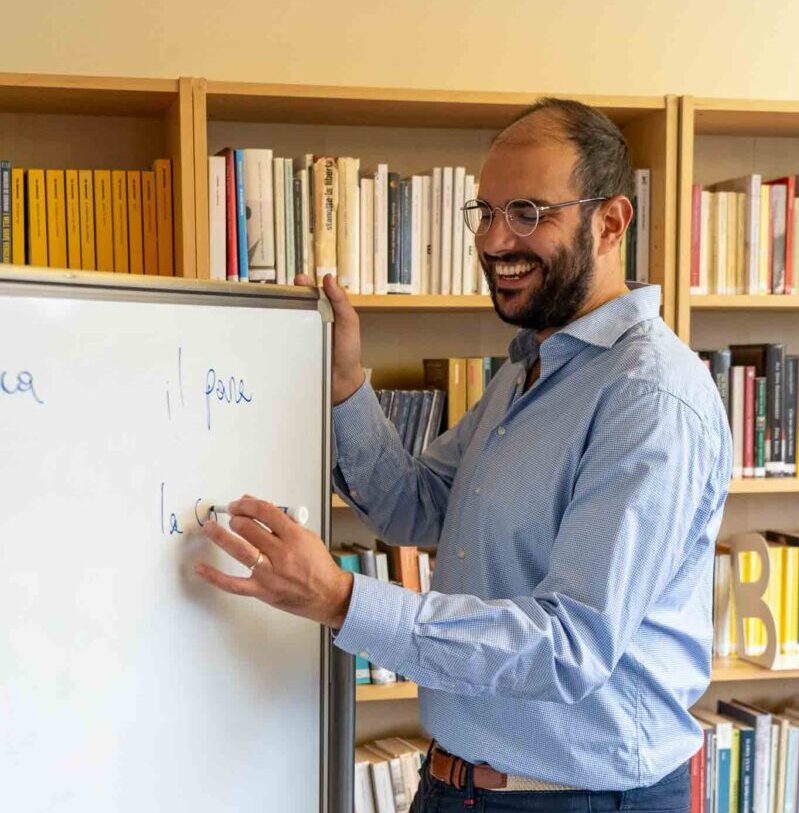
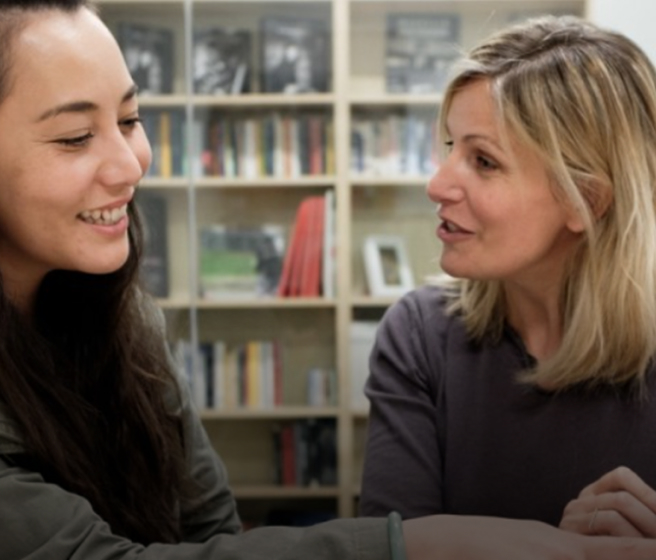
A human teacher. Someone who can tell you why a construction sounds wrong even when it’s grammatically defensible. Someone who can hear your accent and correct it. Someone who has grown up inside the language and can bring in cultural context that no textbook contains.
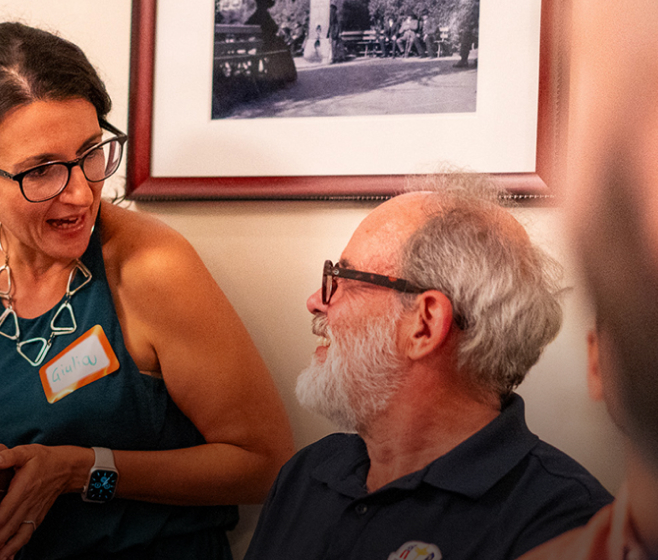
Other students. Language is social. Learning it in isolation, even with the best app, misses the point. You learn to speak by speaking — with people who are also stumbling, who are also trying, who create the kind of low-stakes environment where trying is possible.
Exposure to the actual culture. Not the postcard version. Real Italian films that argue with each other about what Italy is. Real Italian books, both classic and contemporary. Real Italian journalism, with its opinions and its polemics. Real Italian music that isn’t just Andrea Bocelli. This is where meaning lives, and meaning is what you’re trying to acquire.
None of this can be compressed into thirty days. None of it needs to be.
What we try to do at IIS
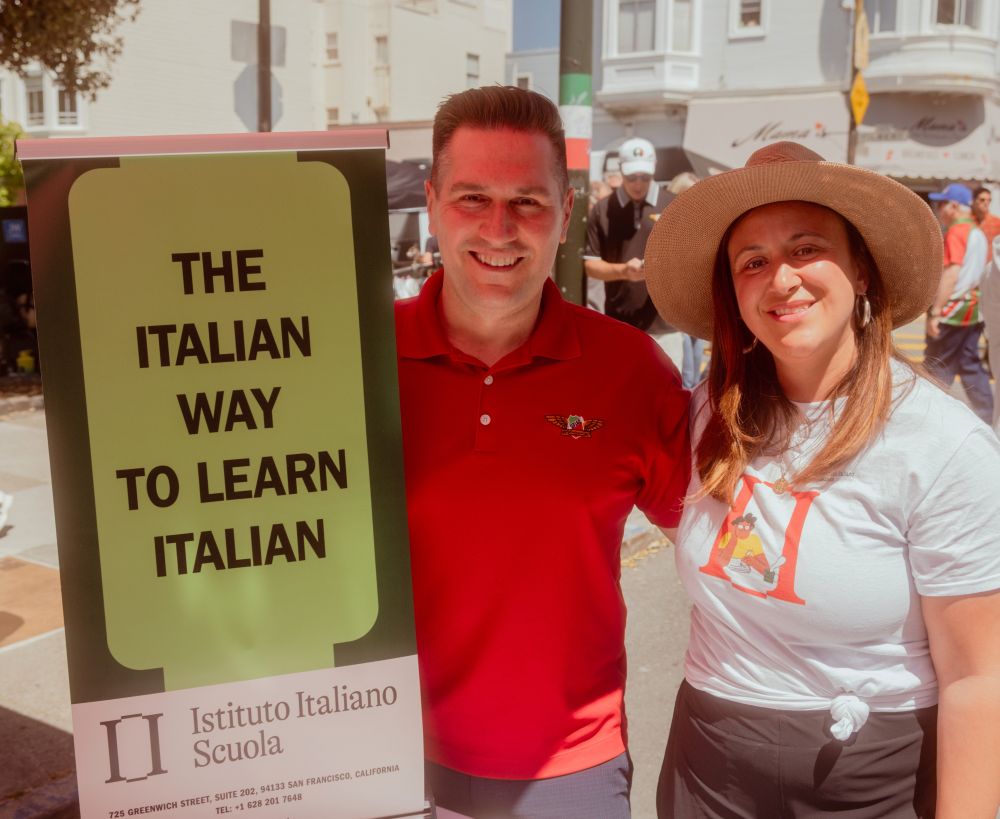
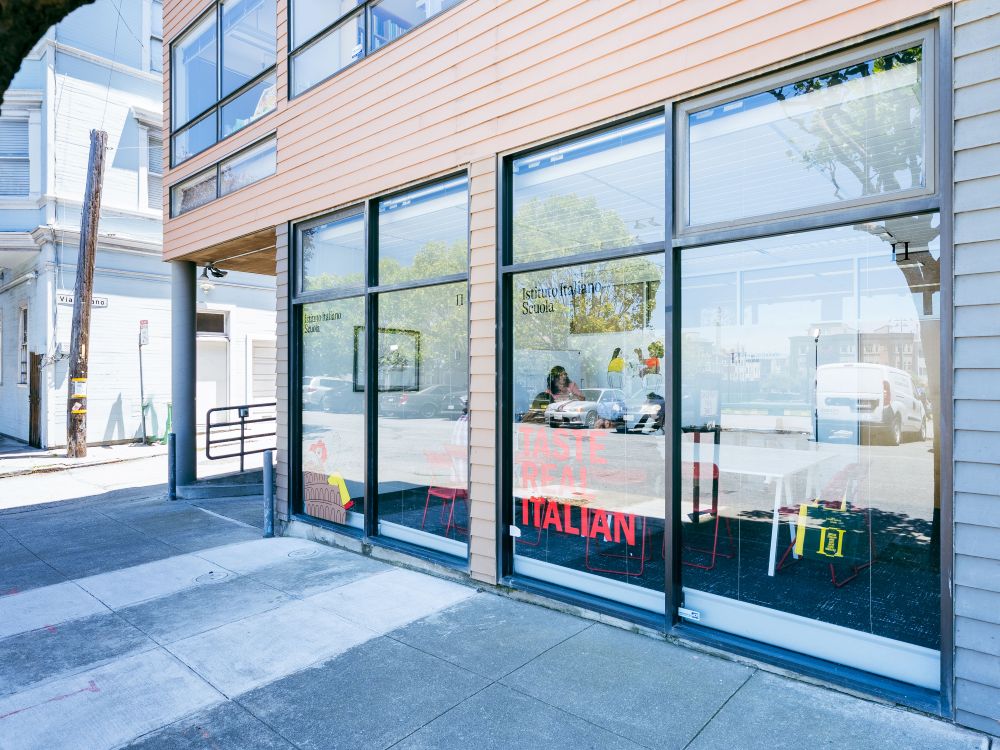
We’re a small non-profit Italian school in San Francisco. About 700 students study with us in a given year, some in our North Beach space and many more online from across the country. We were founded in 1998, and we’ve had time to figure out what we do and don’t believe about how Italian should be taught.
We don’t sell speed. We don’t promise fluency by any specific date. We don’t market Italy the way tourism brochures do — the dolce vita, the slow-food family lunches, the mythical nonna rolling pasta by hand every Sunday. These images exist, sometimes. But they’re a small part of a much larger, more complicated country.
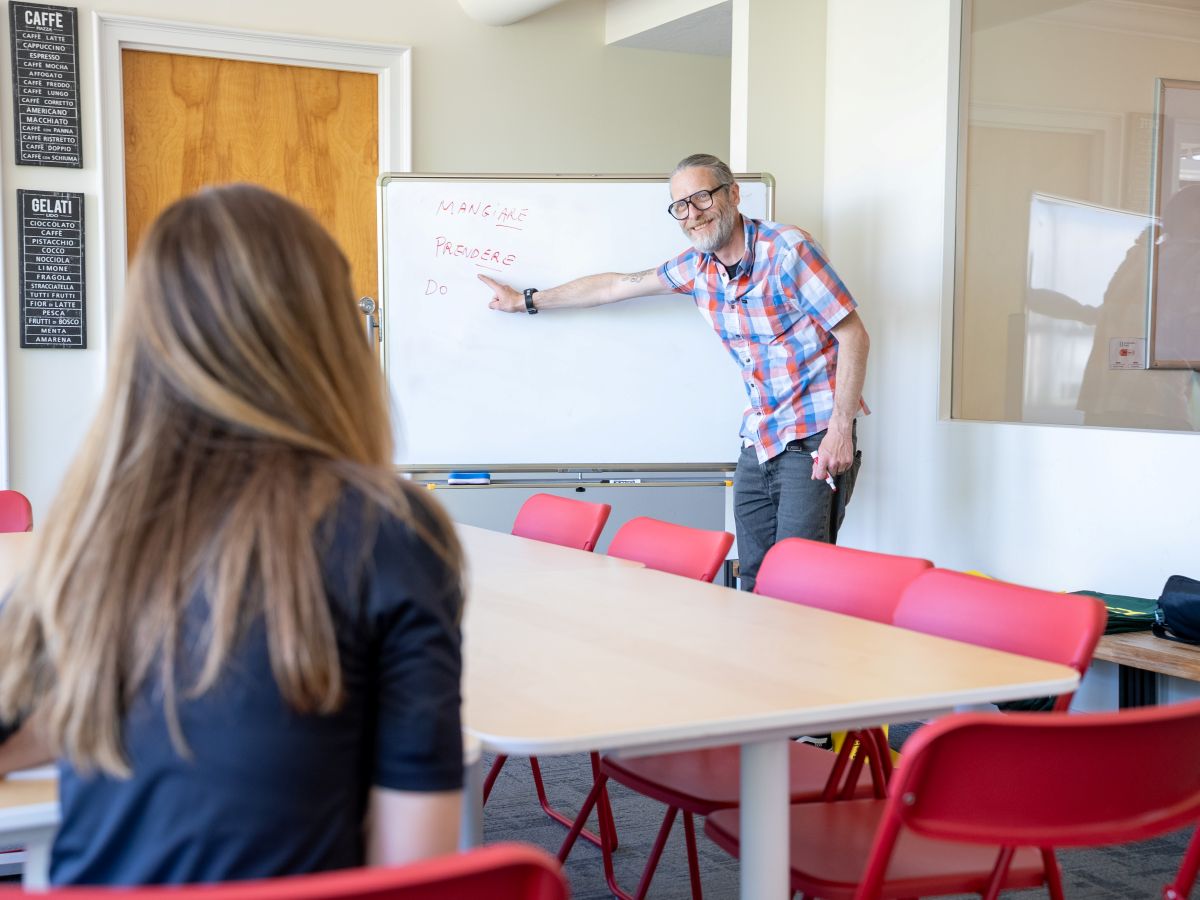
What we try to offer instead is a real relationship with a real culture, over time. Our teachers are all native Italian speakers with degrees from Italian universities — but more than that, they’re people who bring their actual country into the classroom. Not the Italy of Instagram, but the Italy of contemporary politics, of Zerocalcare’s comics, of Ferrante and Baricco and Murgia, of the ongoing conversations about immigration and demographics and the state of the schools. One of our long-term students recently wrote that in her class “we read classic and contemporary Italian literature, and our instructor keeps us up to date on Italian culture and even politics.” This is close to the truth of what we do.
We offer nearly eighty courses per Term. Some are the standard grammar-and-conversation classes across six levels, from Beginners to Perfezionamento. But many are specific: a phonetics course that works on the actual musicality of the language, a series of twelve or twenty-four lessons that walks through the twenty regions of Italy — dialects, foods, cultural specificity — and above all, our literature courses, which are consistently the most popular among our long-term students. Those classes read both classic and contemporary Italian authors, and the discussions that happen in them are the reason many of our students have stayed with us for years.
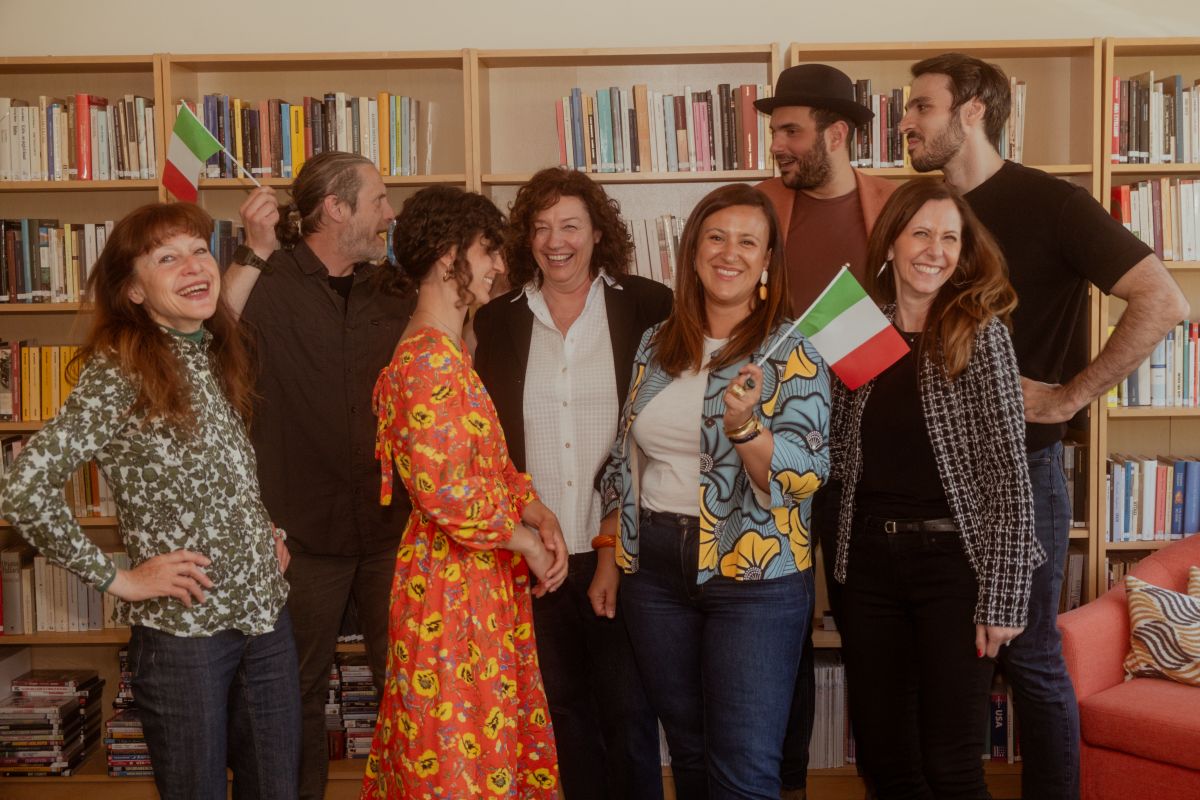
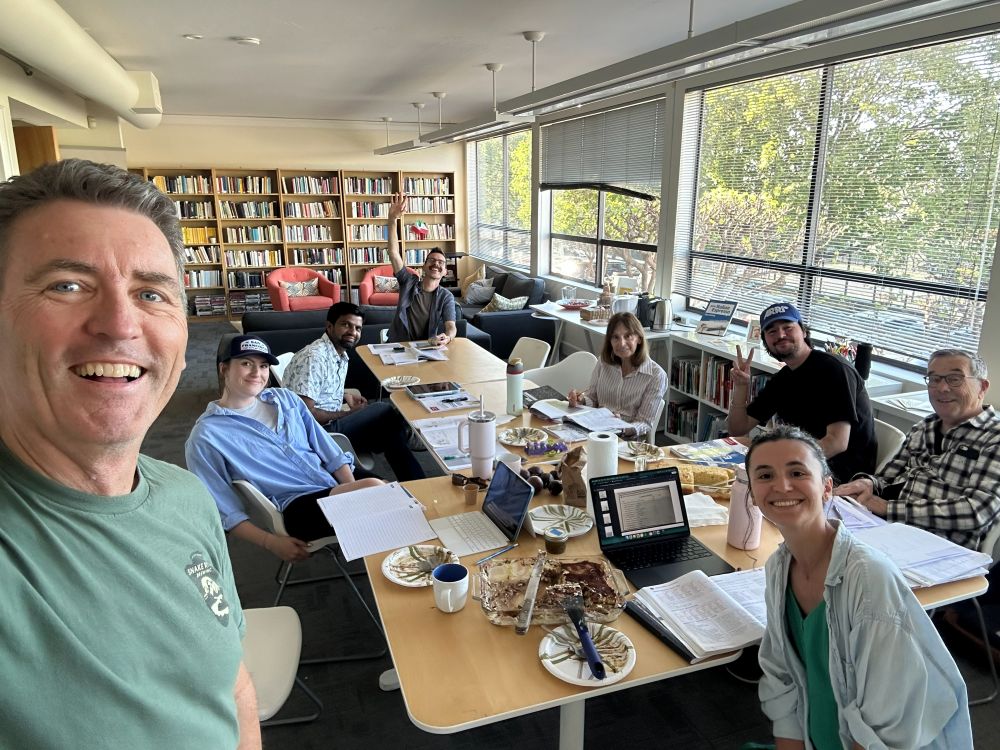
There are also book clubs, film clubs, cooking workshops, and cultural lectures, most of them offered both in person and online. Our online students in Vermont, Michigan, Hawaii, and everywhere in between are not just watching a class on Zoom — they’re in the group. Some of them have taken the step of flying to San Francisco to meet the classmates and teachers they’ve spent months talking to. A student from Michigan came out to visit. Someone from San Diego drove up. This isn’t something we planned. It’s what happens when a class becomes a group of people.
Some of our students have been with us for a decade. They come because, as one of them put it, “short of a long stay in Italy, it is the best way to maintain and improve my language skills.” But most of them stay because they’ve built friendships inside the school — the kind that come from spending two hours a week for years with the same people, arguing about a Calvino story or a passage of Ginzburg.
This is what a language school can be, and what an app cannot.
What Italian is really for
You often hear people say they’re learning Italian because they’re planning a trip, or because they have citizenship paperwork in progress, or because they want to talk to a relative. These are all real reasons. But they’re rarely the reason people stay.
The reason people stay is that learning Italian slowly opens a door. Behind the door there’s a country with 2,700 years of history, twenty regions that behave like small countries, a literary tradition that runs from Dante to Ferrante, a political conversation that is by turns comic and desperate, food that is more complicated than the version you get abroad, music that ranges from opera to trap, and a way of relating to time and to other people that is genuinely different from ours.
You don’t need to learn Italian. But if you do, and you do it well, you get access to all of this — not as a tourist watching from outside, but as someone who is beginning to hear.
Wittgenstein wrote that “the limits of my language are the limits of my world.” He wasn’t talking about Italian specifically, but he could have been.
If you’re thinking about starting
Our classes meet once a week for two hours, in North Beach or online. You can start at any level — if you’re not sure where you’d fit, our free level test gives us the opportortunity to assess your level and recommend the group more suitable for your needs.
You can look at all our adult programs here, including the special groups on literature, phonetics, regional Italy, film, and history.
If you want to ask someone a specific question, you can email our Operations Manager Michela at italianschool@sfiis.org, or call her at 628-201-7648.
There’s no fast track. There’s just the work, and the pleasure of doing it with other people.
A presto in classe.
Related posts