

How to order coffee in Italy like a local: simple rules, cultural tips, and what to avoid


Here's how to order coffee in Italy like a local — and
why the small rules matter.
A small confession before we begin
Italians have very strong feelings about coffee. Not in the sophisticated, tasting-notes-and-altitude way that defines third-wave American coffee culture — but in the way that family rules are strong. There are things you do, things you don’t do, and reasons that mostly come down to: because that’s how it works.
If you’re traveling to Italy this summer, the good news is that no one will throw you out of a bar for ordering a cappuccino at 4 p.m. The waiter might smile a little. The barista might pause for half a second. But you’ll get your cappuccino.
The better news is that with a handful of small rules, you can order coffee like someone who has been doing this their whole life. Here’s everything you need to know — in less time than it takes to drink an espresso.
Rule 1: A “caffè” means an espresso. Always.
The single most common mistake American travelers make is ordering “a coffee” expecting an American-style filter cup.
In Italy, when you say “un caffè, per favore,” you will receive a small, dense espresso in a tiny cup. That is coffee. The full-American-mug experience essentially does not exist in traditional Italian bar culture, and asking for one will mostly produce confusion or, in tourist areas, something called a caffè americano — which is an espresso with extra hot water added.
If you genuinely want filter coffee, look for specialty cafés in big cities. Otherwise, learn to love the small cup. There’s a reason Italians drink several a day.
Rule 2: There’s a time for cappuccino, and lunchtime is not it
This is the rule everyone has heard about, and yes, it’s mostly true.
Cappuccino is a breakfast drink. Italians drink it in the morning, often standing at the bar, often with a cornetto (a slightly sweeter cousin of the croissant). The reason has more to do with digestion than fashion: Italians believe that milk after a meal sits heavily and disrupts digestion. So cappuccino with breakfast: yes. Cappuccino after pasta: a small sin.
Will you be judged? Not really. Will you stand out? A little. The choice is yours.
If you want something coffee-and-milk after a meal, the Italian answer is un caffè macchiato — an espresso “stained” with a tiny splash of milk. Small, fast, post-meal-friendly.
Rule 3: Don’t ask for “a latte” unless you want a glass of milk
This one trips up almost every traveler at least once.
In Italian, latte simply means milk. If you walk into a bar and order “un latte,” you will receive exactly that — a glass of warm or cold milk. No coffee involved.
What Americans call a “latte” is, in Italian, a caffellatte (or caffè latte) — coffee with milk. It exists, but it’s almost exclusively a breakfast drink, often consumed at home rather than at a bar. If you want the closest thing to your local Starbucks order, ask for a cappuccino in the morning, or — at any time — un caffè macchiato if you want it small, or un latte macchiato if you want it large and milk-heavy.
Rule 4: At the bar costs less than at the table
This is the single most useful piece of practical knowledge for travelers.
In most Italian bar, prices are different depending on whether you stand at the counter (al banco) or sit at a table (al tavolo). The difference can be substantial — sometimes double the price for the same drink. This is legal, normal, and often clearly posted on a menu somewhere.
Standing at the bar to drink your coffee is not a sign of a budget traveler — it’s the default Italian way. You walk in, place your order, drink your espresso in two sips while leaning slightly on the counter, exchange a word with the barista, pay, and leave. Total time: about three minutes. Total cost: around €1.20 in most cities.
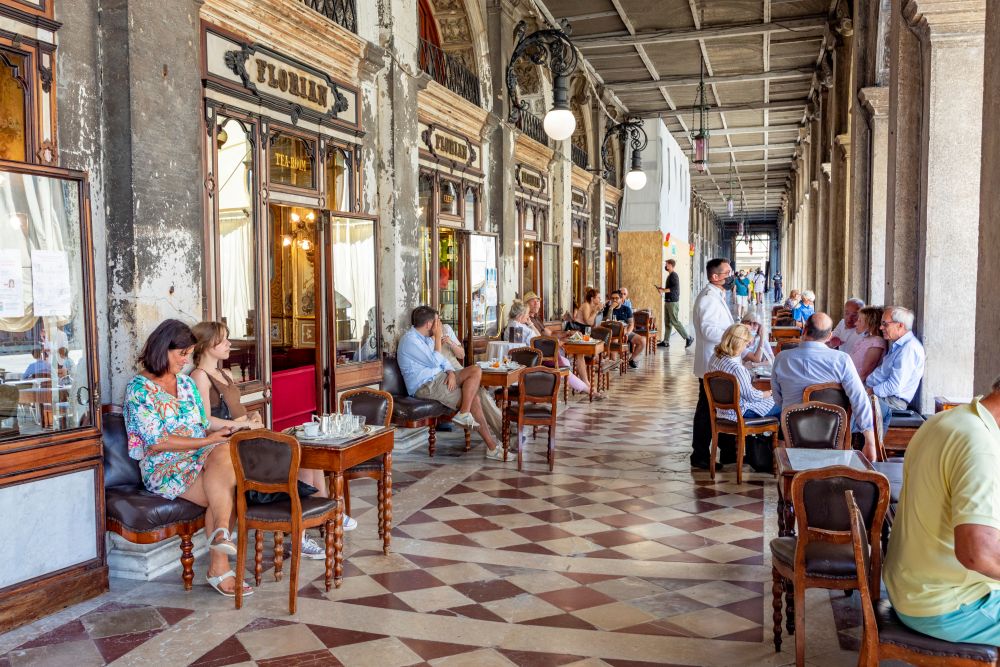
If you sit, you’re paying for the experience of sitting. Which is sometimes exactly what you want — especially in Venice, with a view of the canal. Just know what you’re choosing.
Rule 5: Pay first, then order (sometimes)
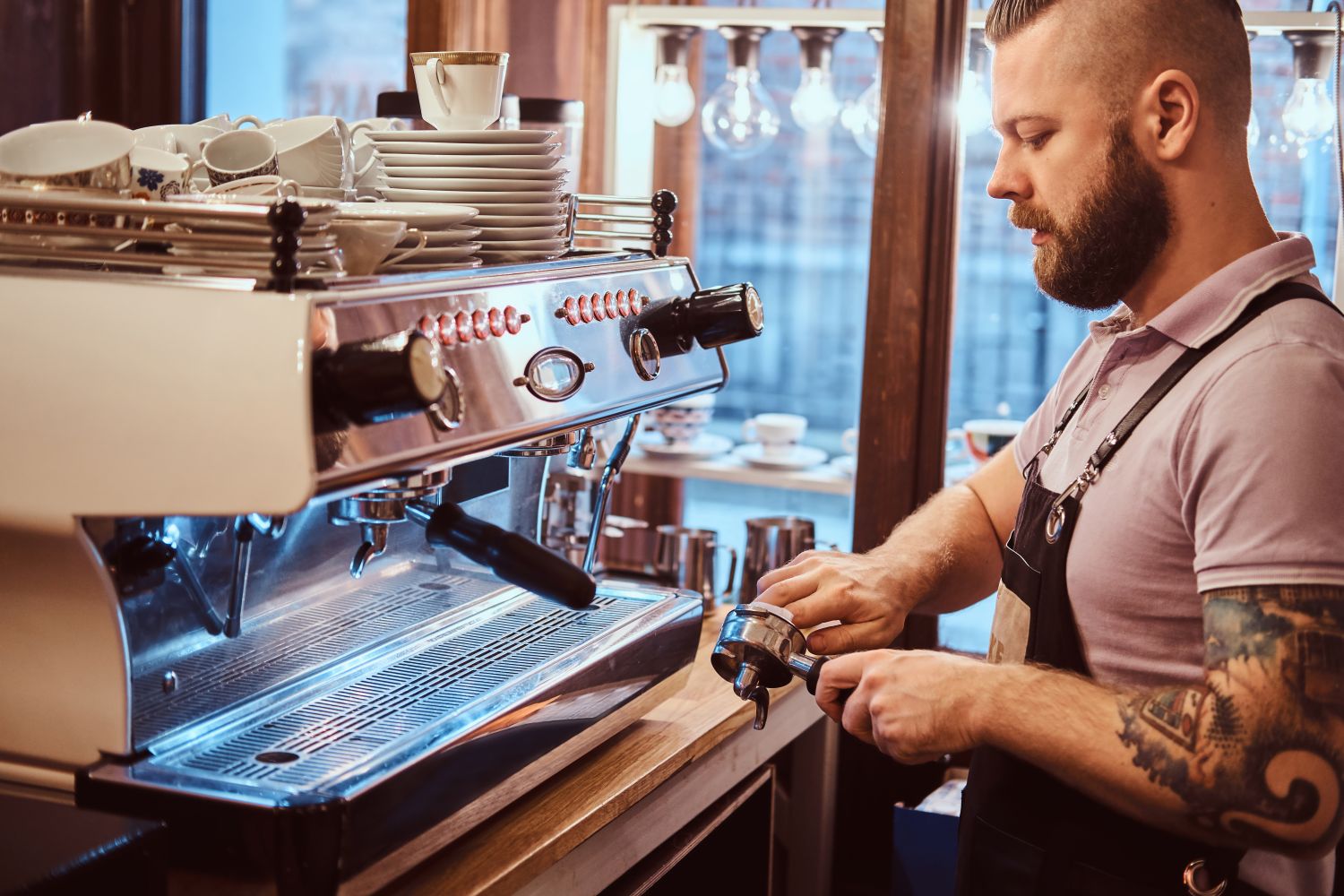
In some Italian bar — especially busier ones in Rome, Milan, and Naples — the system works like this: you pay the cashier first, get a receipt (lo scontrino), and then bring the receipt to the barista to place your order.
In other places, you order first and pay at the end. There’s no universal rule. Watch what locals do for thirty seconds before approaching the counter and you’ll figure out the system instantly.
A small tip: leaving a 5 or 10 cent coin on the bar with your scontrino when you order is a small, friendly gesture that baristas appreciate. It’s not a tip in the American sense — it’s a tiny acknowledgment.
Rule 6: Some words you’ll actually use
A small glossary, in order of usefulness:
- Un caffè — an espresso. The default, all-purpose order.
- Un cappuccino — what you think it is. Morning only, ideally.
- Un caffè macchiato — espresso with a touch of milk. Acceptable any time.
- Un latte macchiato — warm milk “stained” with espresso. Sweeter, larger, less caffeinated.
- Un caffè lungo — an espresso pulled with a bit more water. Slightly less intense.
- Un caffè ristretto — the opposite. A shorter, more concentrated espresso.
- Un caffè decaffeinato — decaf. Sometimes shortened to un deca.
- Un caffè corretto — espresso “corrected” with a splash of grappa or sambuca. Mostly an after-meal thing. Try it once.
And the magic word: Per favore. Always.
The deeper point
Coffee in Italy is rarely about coffee. It’s a punctuation mark in the day — a moment of standing still, a brief conversation, a transition between things. Italians don’t order coffee to take with them in a paper cup; they order it to drink it now, here, in the next two minutes, before going on with whatever they were doing.
If you take only one thing from this article: when you’re in Italy, don’t take your coffee to go. Stand at the bar. Drink it slowly. Look around. The whole point is the pause.
A small note for those who want the ritual at home
You don’t need a plane ticket to start practicing the Italian way of coffee. A moka on the stove in the morning, an espresso machine on the counter, a small cup instead of a mug — these are small choices that change a daily habit.
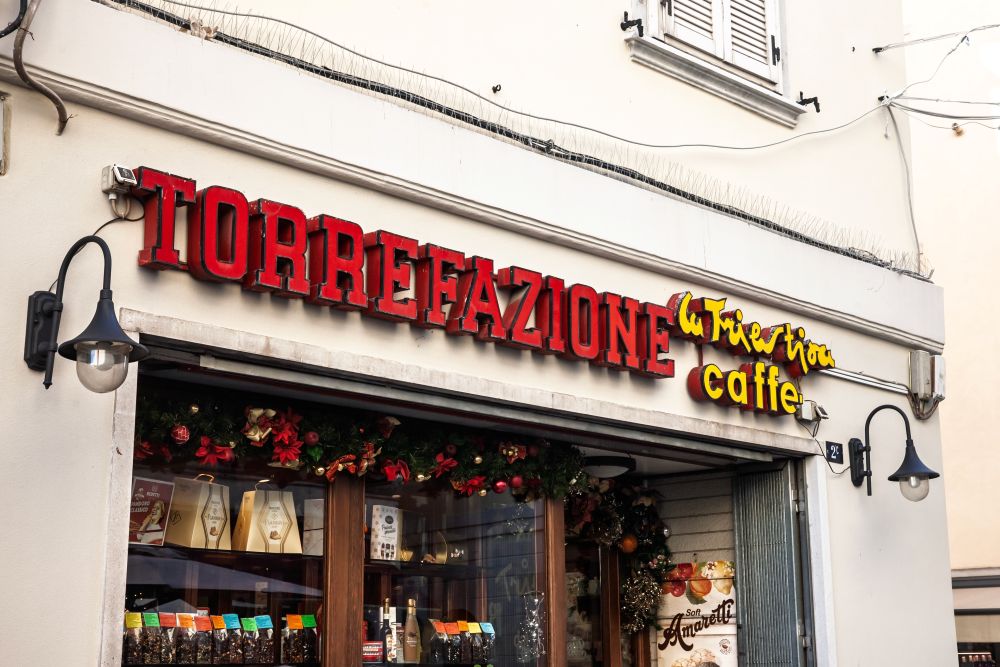
If you’re in the Bay Area, two of our community partners are worth knowing about. Mr. Espresso, based in Oakland, has been roasting Italian-style coffee over oak wood since 1978 — it’s the closest thing to an Italian torrefazione you’ll find on this side of the Atlantic. And De Luca Espresso Repair is the place to go when your espresso machine starts complaining; they fix what others throw away. Both offer discounts to IIS students, which is one of the small perks of being part of our community.
(If you’re enrolled with us, you already know how to redeem these — but if you’re new here and curious, you can read about all our partners and student discounts.)
Want to learn more before your trip?
If you’re traveling to Italy this summer and want to feel more comfortable with the language — not just for coffee, but for restaurants, train stations, asking for directions, and chatting with locals — our Italian for Travelers course is built exactly for that.
No prior Italian needed. Practical phrases, real situations, taught by native Italian instructors who actually live this stuff.
Sign up for Italian for Travelers — or take our free level test if you’re not sure where to start.
Buon viaggio — e buon caffè.
You might be interested in: